
Women in Engineering: Building Sri Lanka’s Future Through Talent, Technology, and Inclusive Leadership
By Eng. Kamala Gunawardena
Engineering has always been one of the strongest foundations of national development. Roads, bridges, buildings, water systems, energy networks, manufacturing plants, communication systems, digital platforms, medical technologies, and sustainable infrastructure are all shaped by engineering thinking. As Sri Lanka looks toward a more competitive, technology-driven, and sustainable future, one truth becomes increasingly clear: the country cannot unlock its full engineering potential without fully recognizing, encouraging, and empowering women in engineering.
Women in engineering are not merely a matter of representation. They are a matter of national capability, innovation, productivity, and inclusive progress. When more women enter, remain, and rise in engineering, the profession becomes richer in perspective, stronger in problem-solving, and more responsive to society's real needs.
Engineering Needs the Full Talent Pool
Sri Lanka needs engineers who can solve complex problems with technical excellence, creativity, ethics, and social awareness. These problems are no longer simple or isolated. Climate change, energy security, smart infrastructure, water management, digital transformation, industrial productivity, urban congestion, food security, and sustainable construction require multidisciplinary thinking.
In this context, excluding or under-utilizing half of the country’s talent pool is not only unfair; it is a strategic loss.
Many young women in Sri Lanka have the intelligence, discipline, creativity, and commitment required to become outstanding engineers. They perform exceptionally well in schools and universities. They enter demanding engineering disciplines and prove their capability through academic excellence, project work, research, and professional performance. Yet, the challenge is not only about entry into engineering. It is also about retention, confidence, career progression, leadership opportunities, and recognition.
The real question is not whether women can succeed in engineering. They already have. The better question is: How can Sri Lanka create an engineering ecosystem where more women are encouraged to contribute at their highest level?
From Participation to Leadership
Women in engineering should not be seen only as participants in the profession. They must be seen as designers, innovators, project leaders, researchers, entrepreneurs, consultants, academics, policy contributors, and future industry leaders.
A woman engineer may design a bridge, optimize a manufacturing process, lead a digital transformation project, manage a construction site, develop a renewable energy solution, improve a water treatment system, work on artificial intelligence applications, or contribute to national infrastructure planning. In every one of these roles, she is not simply “a woman in engineering.” She is an engineer contributing to national progress.
However, for this contribution to grow, women must be supported beyond the early stages of their careers. Mentoring, sponsorship, leadership training, fair evaluation systems, flexible career pathways, and inclusive workplace cultures are essential. Many talented women leave or slow down in their professional journey, not because they lack competence, but because systems are not always designed to support different life stages, responsibilities, and leadership pathways.
Inclusive leadership means recognizing this reality and designing better professional environments.
Technology Creates a New Opening
The future of engineering will be deeply connected with technology. Artificial intelligence, robotics, automation, data analytics, digital twins, renewable energy technologies, smart cities, Internet of Things, advanced manufacturing, and sustainable materials are changing the engineering landscape.
This transformation creates powerful opportunities for women engineers.
Unlike some traditional environments where physical presence at a site or rigid working patterns were seen as the only measure of commitment, technology now allows engineering work to be more flexible, data-driven, collaborative, and knowledge-based. Design, simulation, monitoring, analysis, project coordination, research, and decision support can now be performed in more advanced and flexible ways.
This does not reduce the importance of field engineering. Rather, it expands the meaning of engineering work. It opens new doors for women to contribute in high-impact areas such as AI-enabled engineering, sustainability, digital infrastructure, smart manufacturing, climate resilience, biomedical engineering, software engineering, energy optimization, and engineering management.
Sri Lanka must encourage more girls and young women to see these emerging fields as exciting career opportunities.
The Importance of Role Models
One of the most powerful ways to attract young women into engineering is visibility. Students cannot aspire to become what they rarely see.
When schoolgirls see women engineers leading projects, speaking at professional forums, publishing research, managing plants, heading technical teams, serving on boards, and contributing to national development, engineering becomes more imaginable and inspiring.
Therefore, professional institutions, universities, companies, and media platforms have a responsibility to highlight the stories of women engineers. These stories should not be limited to ceremonial recognition. They should show the real journey: the challenges, the discipline, the technical depth, the leadership lessons, and the impact created.
A young girl in Sri Lanka should be able to say, “I can become an engineer. I can design. I can lead. I can innovate. I can build the future.”
Creating Inclusive Engineering Workplaces
Inclusive leadership is not about giving special treatment. It is about creating fair conditions for talent to grow.
Engineering organizations can support women by strengthening several areas:
First, recruitment and career development must be based on competence, potential, and performance. Women should have equal access to challenging assignments, field exposure, leadership roles, and technical decision-making opportunities.
Second, organizations must create respectful workplace cultures. Engineering environments should never tolerate dismissive attitudes, bias, exclusion, or inappropriate behavior. Professionalism must be the standard.
Third, mentorship and sponsorship should be institutionalized. Mentorship helps women navigate professional challenges. Sponsorship goes further by actively opening doors for advancement, visibility, and leadership opportunities.
Fourth, organizations must support work-life integration without damaging professional growth. Flexibility should not be seen as a weakness. In modern engineering, results, accountability, and value creation matter more than outdated assumptions about presence and availability.
Finally, leadership teams must measure progress. What gets measured gets managed. Organizations should review women’s participation in technical roles, project leadership, promotions, professional development, and decision-making forums.
The Role of IESL and the Engineering Community
The Institution of Engineers, Sri Lanka, has a significant role to play in shaping the future of the profession. As the apex professional body for engineers in the country, the IESL can continue to create platforms that encourage, recognize, and develop women engineers.
This can include mentorship networks, leadership forums, school outreach programs, technical conferences, research recognition, policy discussions, industry partnerships, and visibility for women engineers across all disciplines.
Engineering is not only about technical calculations. It is also about professional culture, ethics, responsibility, and nation-building. Therefore, the engineering community must collectively ensure that women are not only welcomed into the profession but also enabled to influence its future direction.
Inspiring the Next Generation
If Sri Lanka wants more women in engineering, inspiration must begin early.
Schools, parents, teachers, and society must avoid outdated messages that limit girls’ career dreams. Mathematics, science, technology, and problem-solving should be encouraged equally among both genders: girls and boys. Engineering must be presented not as a difficult, male-dominated field, but as a meaningful profession that allows people to solve real problems and improve lives.
Young girls should be introduced to engineering through practical projects, site visits, innovation competitions, robotics programs, environmental projects, exposure to coding, and interactions with practicing engineers. When engineering becomes visible, practical, and exciting, more students will see themselves in it.
Women Engineers as Nation Builders
Sri Lanka’s future will require better infrastructure, cleaner energy, smarter industries, stronger digital systems, more resilient cities, and sustainable development. These are engineering challenges. They are also leadership challenges.
Women engineers can play a defining role in this journey.
They bring technical expertise, discipline, creativity, empathy, collaboration, and leadership capacity. Their contribution can strengthen not only projects and organizations, but also communities and national development.
The future of engineering in Sri Lanka should not be built by a limited section of society. It should be built by the best minds, the strongest values, and the widest possible talent base. That future must include women fully, visibly, and powerfully.
Conclusion
Women in engineering are not a symbolic topic. They are a strategic priority for Sri Lanka’s future.
To build a stronger nation, we must build a stronger engineering profession. To build a stronger engineering profession, we must create space for every capable mind to contribute. Talent has no gender. Innovation has no gender. Leadership has no gender. Engineering excellence must be open to all.
As Sri Lanka moves forward, the message is clear: empowering women in engineering is not only the right thing to do; it is the smart thing to do.
Women engineers are not just entering the profession. They are helping build the future of Sri Lanka through talent, technology, and inclusive leadership.
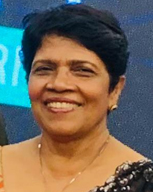 Eng. Kamala Gunawardena , a Civil Engineer, has had a continuous and distinguished consulting career in the areas of roads, highways, and expressways. Most recently, she served as a Consultant to Disaster Management Project under the Ministry of Transport, Highways and Urban Development, while also working as a freelance consultant in the industry.