
Bridging Generations of Engineering Excellence: A Shared Future for IESL
By Eng. Kamala Gunawardena
The Institution of Engineers, Sri Lanka stands today on a proud foundation built by generations of committed professionals who gave their knowledge, time, discipline, and leadership to uplift both the profession and the nation. Their contribution deserves our deepest respect. At the same time, the future of engineering calls us to think differently, adapt faster, and work more closely across generations than ever before. This is why the time has come to strengthen one important idea: bridging generations of engineering excellence.
Engineering is not merely about structures, systems, machines, software, energy, transport, or technology. It is about solving real problems, improving lives, and building a better future for society. To do that effectively, we need the wisdom of senior engineers, the practical drive of mid-career professionals, and the energy and fresh thinking of younger engineers. When these strengths come together, the Institution becomes stronger, more relevant, and more inspiring to all its members.
Our senior engineers represent a treasure of experience. They carry not only technical expertise, but also lessons in ethics, resilience, professionalism, service, and nation-building. Their journeys remind us that engineering excellence is not built overnight. It is earned through discipline, responsibility, and a deep sense of purpose. As an Institution, we must continue to value and honor their contribution while creating more meaningful opportunities for them to guide, mentor, and shape the next generation.
Our middle generation of engineers carries a unique responsibility. They are often at the center of execution, leadership, project delivery, client engagement, innovation, and team development. They understand both the traditions that built the profession and the changing realities of the modern world. They are in a powerful position to connect experience with transformation. Their role in IESL should be further strengthened through leadership development, stronger professional networks, increased institutional engagement, and platforms that enable them to shape policy, industry, and the future direction of the profession.
Our young engineers bring aspiration, curiosity, creativity, and digital fluency. They are entering a world shaped by rapid technological change, global competition, sustainability pressures, artificial intelligence, and new expectations of leadership. They need an Institution that not only welcomes them, but actively invests in them. They need guidance, mentorship, career direction, relevant professional development, and opportunities to contribute. Young engineers should not feel that they are waiting at the edge of the profession. They should feel that they are already a valued part of its future.
A truly strong IESL must therefore be an Institution where generations do not operate in silos. It must be a professional home where experience is respected, emerging leadership is nurtured, and youth is inspired. It must create more spaces for dialogue, collaboration, mentoring, knowledge-sharing, and collective problem-solving across age groups and disciplines. When generations are connected, the profession becomes more human, more dynamic, and more future-ready.
This bridging of generations is not only about relationships. It is also about relevance. The engineering profession today must respond to complex national and global challenges. From infrastructure and energy to water, transport, sustainability, manufacturing, digital transformation, and resilience, the role of engineers is becoming even more critical. Sri Lanka needs an engineering profession that is united, respected, future-oriented, and ready to contribute to national progress with confidence and credibility. IESL must continue to be the platform that elevates the voice of engineers in shaping the future of the country.
To build that shared future, we must also strengthen the culture of inclusion and belonging within the Institution. Engineers from different generations, sectors, disciplines, regions, and professional stages should feel seen, heard, and valued. The Institution must not be perceived as belonging only to one group, one generation, or one professional circle. It must be a place where every engineer can proudly say, “This is my Institution too.”
The future of IESL should therefore be built on a few clear principles: respect for legacy, commitment to professional excellence, investment in future talent, stronger engagement across generations, and a shared sense of responsibility to the nation. These principles can help us move beyond fragmentation and toward unity. They can help us preserve what is noble in our profession while embracing what is necessary for the future.
Bridging generations of engineering excellence is not simply a slogan. It is a mindset. It is a direction. It is a commitment to ensuring that the strength of our past becomes the strength of our future. It is about bringing together wisdom and innovation, tradition and transformation, experience and aspiration. It is about ensuring that IESL remains not only respected for what it has been, but also admired for what it is becoming.
If we can unite the hearts, minds, and capabilities of engineers across generations, there is no limit to what our Institution can achieve. We can build a stronger profession. We can inspire a stronger membership. We can create a stronger national impact. And together, we can shape a shared future for IESL that every engineer will be proud to belong to.
The path ahead is not about choosing one generation over another. It is about bringing all generations together in service of excellence. That is the shared future we should build. That is the shared future IESL deserves.
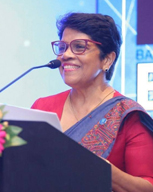 Eng. Kamala Gunawardena , a Civil Engineer, has had a continuous and distinguished consulting career in the areas of roads, highways, and expressways. Most recently, she served as a Consultant to Disaster Management Project under the Ministry of Transport, Highways and Urban Development, while also working as a freelance consultant in the industry.